The tradition, and what to expect at the counter
Argentine asado: fire, cuts, ritual
What asado is, how fire and cuts work, the order of the meal, and how a Palermo counter turns the ritual into a nine-course evening, from official sources.
See Fogón Asado seats on GetYourGuide ↗Quick answer
Asado is the Argentine way of cooking meat over wood or charcoal embers on a grill called a parrilla, and also the social gathering built around it. The cook, the asador, controls the heat, and the meat is usually seasoned with salt rather than marinated. Sausages, offal and cheese come first, then cuts such as ribs and flank. A restaurant like Fogón Asado turns this into a fixed tasting menu cooked at a counter.
What asado means
Asado names both a technique and an occasion. It is the cooking of meat over fire on a grill, the parrilla, and the gathering that goes with it. It is most associated with Argentina and Uruguay, and similar traditions exist in neighbouring countries. The person in charge of the fire is the asador. Buenos Aires's tourism board calls asado a ritual and an excuse to get together, and says none of it works without the asador. In Argentine cuisine, a Sunday family lunch often centres on asado, and few dishes match the national identity as closely.
The fire: embers under the grill
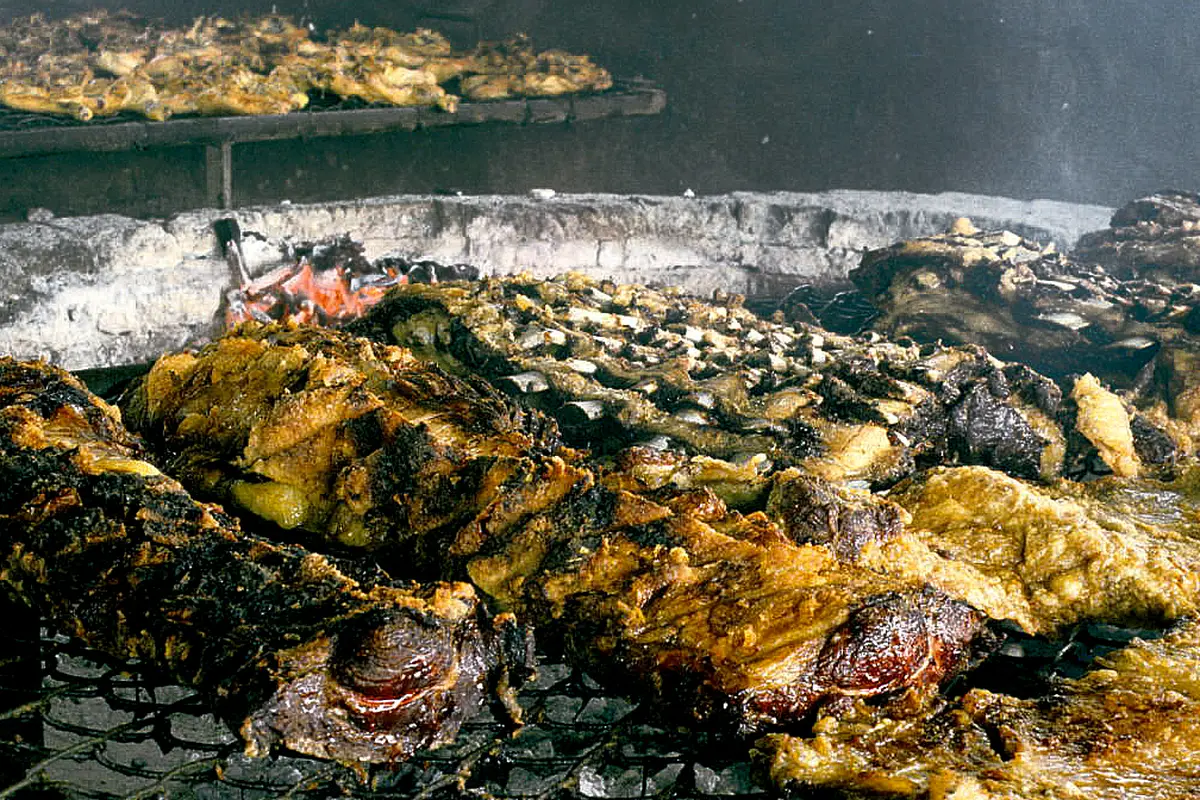
The fire comes first. An asador burns wood or charcoal down, then spreads the glowing embers under the grill, keeping some fire to one side to make more. Charcoal is often made from native trees such as quebracho or algarrobo, while pine and eucalyptus are avoided because their resin smells strong. Cooks judge the heat by holding a palm over the embers at grill height: the longer you can keep it there, the lower the heat. The general rule is thin cuts on high heat, thick cuts on low. The meat is seasoned with coarse salt, not marinated.
The order of the meal
An asado arrives in stages. Sausages such as chorizo and morcilla (blood sausage), offal and often provoleta, a slice of provolone cooked on the grill with oregano, come first while the slower cuts are still cooking. Offal includes chinchulines (small intestines) and mollejas (sweetbreads). Then come the ribs, flank and other beef cuts, with bread and a simple salad alongside. Dessert is often fresh fruit. A restaurant can reorder all of this, so treat it as the home-style outline, not a description of any one menu.
The cuts, in plain words
These are cuts often named in descriptions of an asado, translated. They are general terms, not a list of what any one restaurant serves. Breed, feeding, ageing and how the fat develops also change the taste, which is why a restaurant like Fogón talks about provenance with each cut. Some cuts need intense direct heat and others long, controlled cooking, so the fire matters as much as the meat.
- Asado de tira: beef ribs cut across the bone into strips
- Vacío: flank steak
- Entraña: hanger steak
- Lomo: tenderloin
- Matambre: rolled, stuffed steak, sliced and often served cold
Sauces, salads and wine
Chimichurri, a sauce of herbs, garlic and vinegar, is the classic condiment, traditionally used on offal rather than on steaks. The Argentine version has no chilli, only a milder red pepper called ají molido. Salads are simple: tomato, lettuce and onion, or ensalada rusa, a potato salad. Wine, beer and soft drinks are common. Malbec is the classic partner, but Fogón says its Argentine wine pairing also explores other varieties, regions, altitudes and styles.
Other ways of cooking asado
Not every asado is a grill over embers. In Patagonia, whole lambs and goats are cooked over an open fire on a stake, a technique called asado a la estaca. Cooking al asador means a whole animal splayed on a metal cross beside the fire, while a la parrilla means a grill over embers. Some cooks use a plough disc, an asado al disco, or half an oil drum, a chulengo, to shelter the fire from wind. In Uruguay, meat is grilled over embers without charcoal. Brazil's churrasco is related, but usually cooks faster.
How a restaurant turns it into a tasting
Fogón puts a custom-designed parrilla in the middle of the dining room, where chefs cook, carve and serve in front of guests. It serves a fixed tasting menu rather than an à la carte one. That, the restaurant says, lets the sequence tell a story through cuts, products and fire techniques, and gives the kitchen control of time: each cut reaches the fire at a set moment, cooks, rests and is carved when it is ready. The restaurant calls its approach traditional Argentine techniques reinterpreted in a contemporary way. It also explains the name: fogón means a hearth or open fire, and in Argentina the place where people gather around it.
What you see and hear at the counter
Guests sit side by side at a low counter around the grill, so every seat has a view of the cooking, and the restaurant says there is no separation between kitchen and dining room. It says you feel the heat on your skin, smell the wood and the fat reaching the embers, and hear the fire crack. The chefs work face to face with guests and explain the products, cuts and techniques as they prepare them. You can ask questions as you go. The chef also gives a short history of the asado tradition. Hosts speak English, Portuguese and Spanish, so you don't need Spanish to follow along.
Length, start times and the room
Set aside two to three hours. The restaurant gives a longer running time than some booking descriptions, so plan for the longer one. Lunch and dinner each have a fixed start, and service begins at the same time for every guest, so arriving late means missing the opening. Your booking calendar and confirmation show the time for your date. The restaurant describes the room as enclosed and shared, so plan for indoors. Hotel pickup isn't included, so check the meeting-point address on your booking and arrange your own ride.
Kids, dress, access and diets
The restaurant's minimum age is 14, and guests under 18 must come with an adult. Some descriptions call the evening adults-only, so ask the host about teenagers. The dress code is smart casual, and sleeveless shirts aren't allowed. The restaurant is wheelchair-accessible. Pets aren't permitted. The kitchen says it can adapt the menu for vegetarian, pescatarian, gluten-free and lactose-intolerant guests and for specific allergies, but it wants the details in the reservation notes, including how many guests need an adapted menu.
Read next: Fogón Asado: what to expect from the 9-course tasting
Who this isn't for
If you want to learn to cook over fire, this isn't a class: you watch, taste and ask questions. If you want a quick meal, the long, fixed-start sitting won't suit you. If you want to choose your cuts and wine by the bottle, a classic parrilla is closer to what you're after. If you eat no meat at all, a menu built around Argentine beef and the grill is a poor match even with adaptations. And children under 14 can't come. The counter also seats you side by side with other guests, with the cooking as the focus, so it is not the choice for a private, quiet dinner.
Frequently asked questions
What is an asado?
A technique and a social event: meat cooked over embers on a grill called a parrilla, led by a cook called the asador. It is most associated with Argentina and Uruguay and usually includes beef, sausages and offal.
Is asado the same as a barbecue?
It's close, but not identical. In asado the meat cooks over embers spread under the grill, and it is usually seasoned with salt only. Brazil's churrasco is related but usually cooks faster.
What does an asador do?
The asador lights and tends the fire, controls the heat, cooks the meat and serves it. Buenos Aires's tourism board calls the asador the person responsible for the whole ritual.
Which cuts are used in an asado?
Typical cuts include asado de tira (ribs), vacío (flank), entraña (hanger), lomo (tenderloin) and matambre, plus sausages and offal such as morcilla and mollejas.
What does fogón mean?
It means a hearth or open fire. In Argentina it also means the place where people gather around the fire, as the restaurant that took the name explains.
Is Fogón Asado a traditional asado?
It starts from traditional Argentine techniques and reinterprets them in a contemporary way, as a fixed tasting menu. It is not a classic home-style or à la carte asado.
Sources